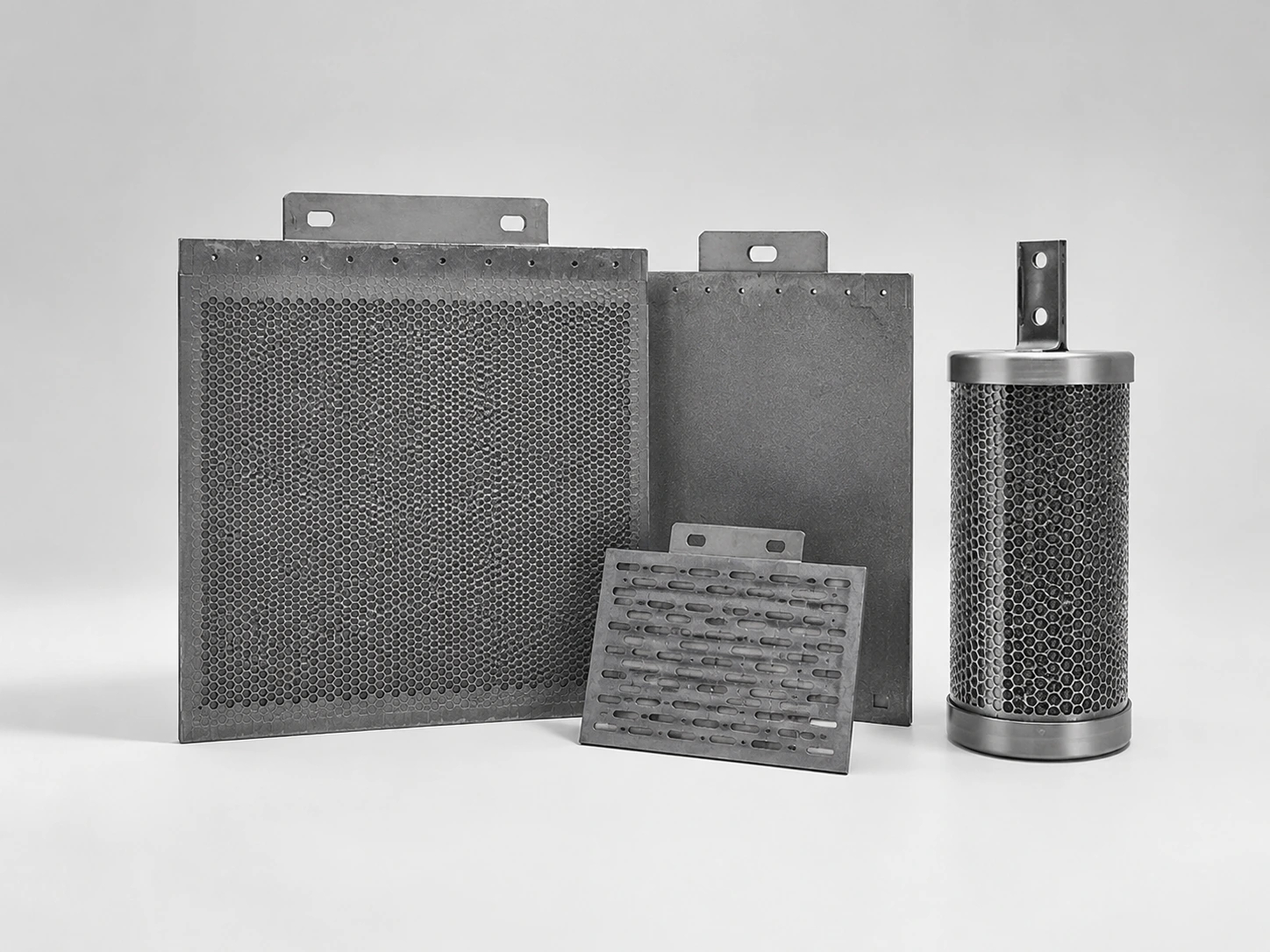
Titanium Anodes & Functional Electrodes

Coated titanium anodes and application-specific electrodes for industrial processes where electrolyte chemistry, current density, corrosion resistance and service life are central to performance.

Titanium Anodes & Functional Electrodes

Main product types

Engineered from the electrolyte outward

For technical review, please provide the process, electrolyte or water chemistry, current density, temperature, dimensions, quantity and installation method. TJNE will review coating system, substrate form and connection structure according to the actual operating environment.

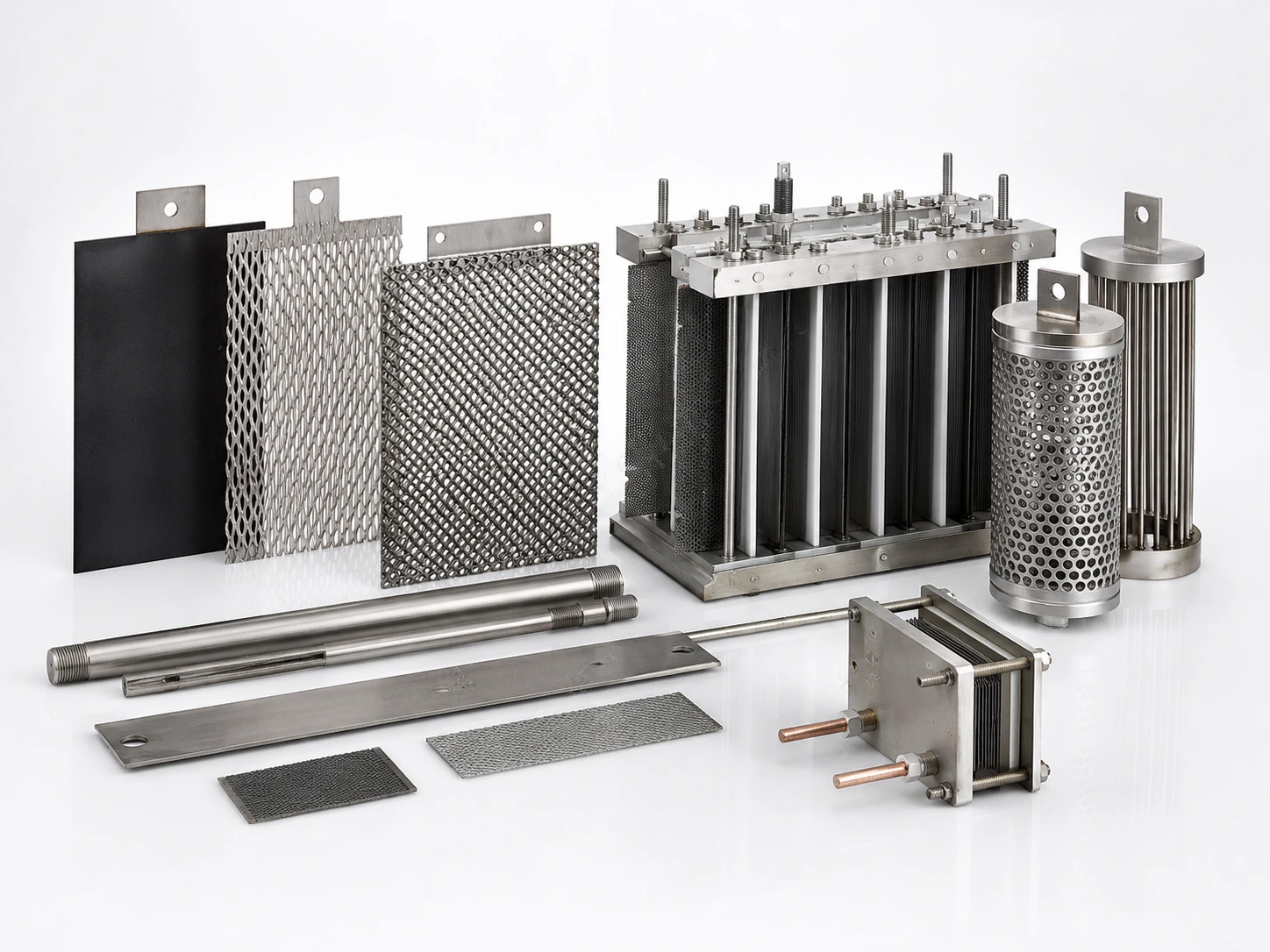
MMO and DSA titanium anodes
01

MMO / DSA Titanium Anodes

Mixed metal oxide and DSA-type titanium anodes are selected for long-running electrochemical processes where catalytic activity, dimensional stability and corrosion resistance must be balanced.

  • Ru-Ir, Ir-Ta and application-specific coating systems
  • Plate, mesh, tubular, rod, ribbon, wire and customised forms
  • Used in water treatment, ICCP, chlorination and industrial electrolysis
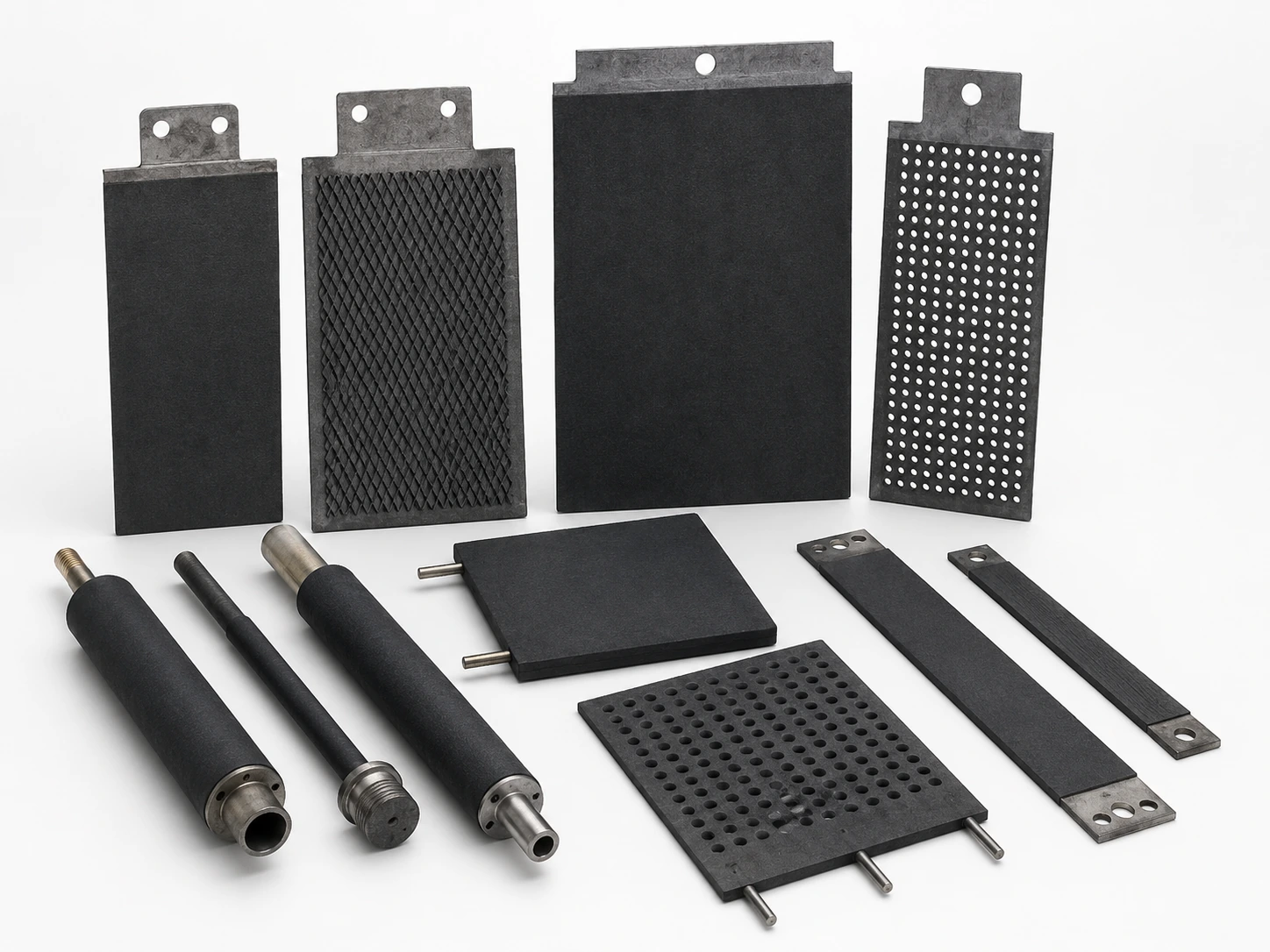
PbO2 titanium anodes
02

PbO₂ Titanium Anodes

PbO₂ titanium anodes are selected for demanding oxidation and non-ferrous metal electrolysis duties where strong oxidation capability is needed. The final structure should be reviewed against electrolyte composition, current density and service-life expectations.

  • Suitable for selected copper, nickel and zinc electrolysis scenarios
  • Titanium substrate with functional PbO₂ surface
  • Configured according to medium, duty cycle and installation conditions
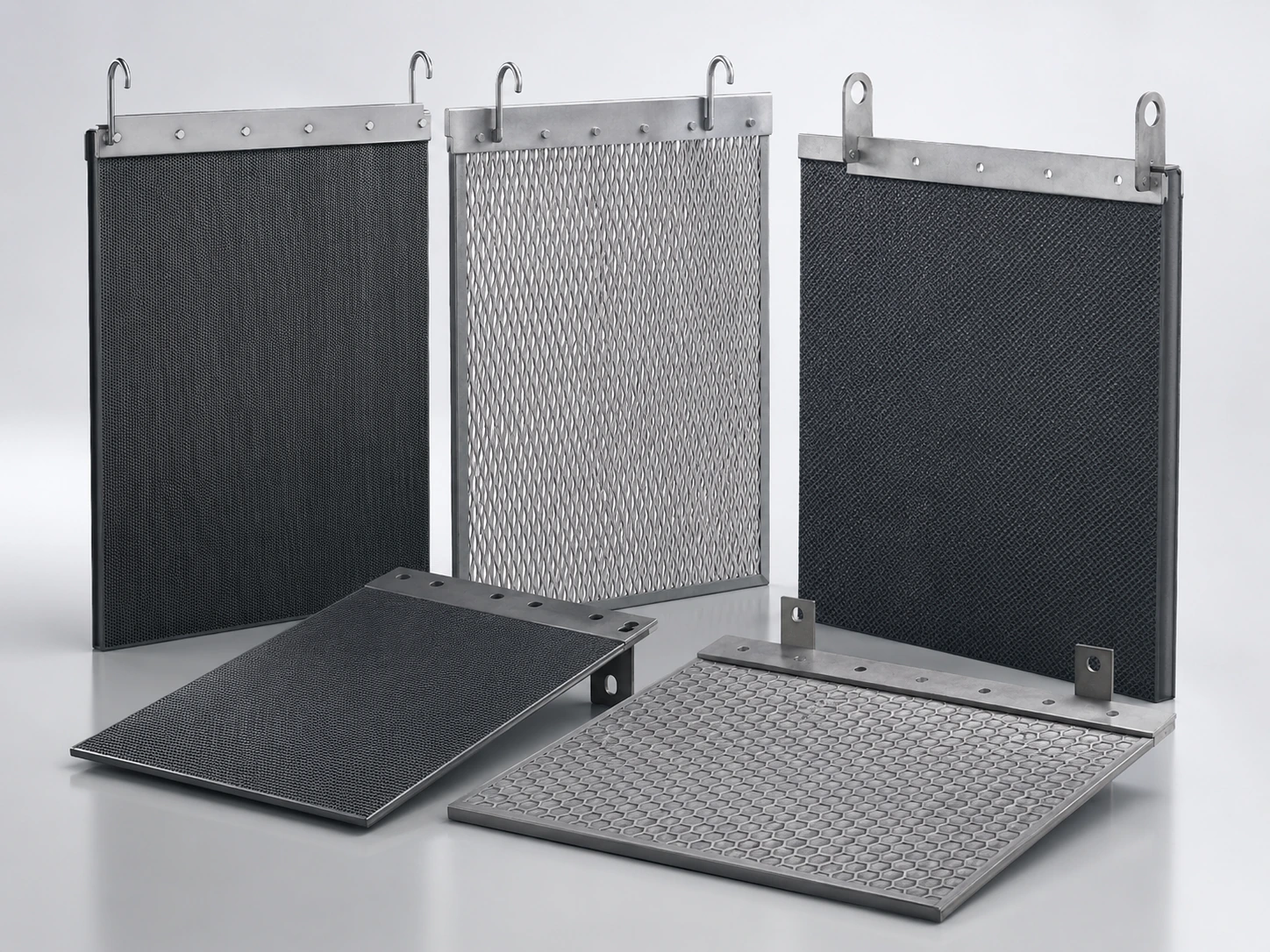
Copper foil anode related assemblies
03

Copper Foil Anodes

Copper foil anodes mainly refer to Ru-Ir coated titanium anode plates and anti-oxidation anode plates installed in foil-machine anode cells for electrolytic copper foil production. They should be discussed together with anode-cell structure, current distribution, operating voltage and line stability.

  • Ru-Ir coated titanium anode plates for copper foil anode cells
  • Anti-oxidation anode plates and related anode-cell components
  • Matched with TJNE anode cells and copper foil equipment modules
PCB electroplating anodes
04

PCB Electroplating Anodes

PCB anodes are reviewed according to plating bath chemistry, current distribution, line interface and production requirements for electronics and surface-treatment processes.

  • Anodes for PCB and electronics plating applications
  • Configured according to bath chemistry, current density and installation interface
  • Can be discussed together with replacement, pilot or production-line requirements
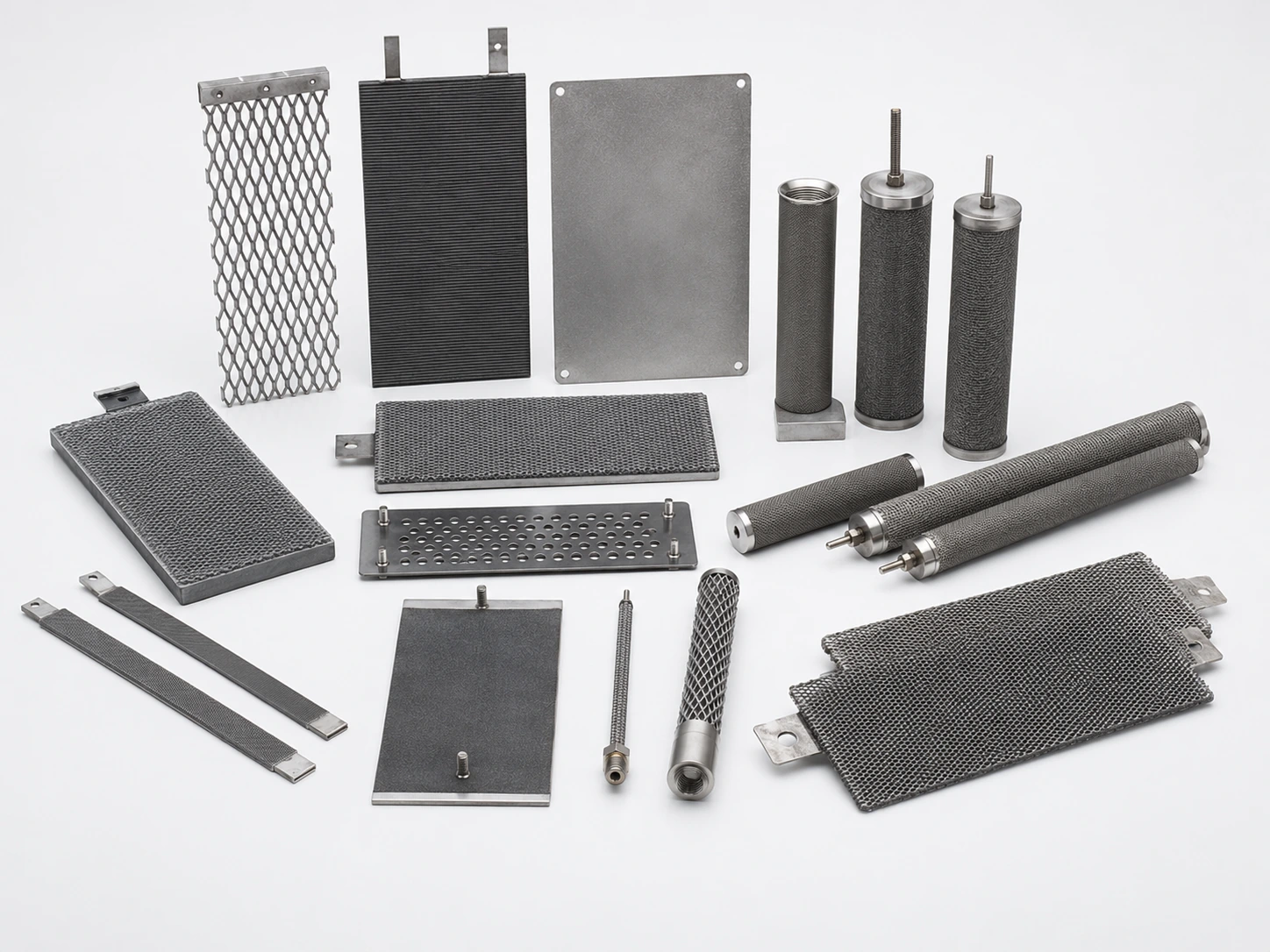
Titanium electrode family and custom assemblies
05

Custom Functional Electrodes

Many industrial electrochemical projects require non-standard dimensions, connection methods or structural details. TJNE can support customised electrode assemblies when the application conditions and interface requirements are clearly defined.

  • Custom substrate forms and connection structures
  • Support for pilot tests, industrial trials and equipment-integration interfaces
  • Engineering review based on current density, electrolyte and equipment interface

Typical specification range

General configuration parameters

These values are indicative ranges across common configurations. Final specification is reviewed against operating conditions, electrolyte, drawings and project scope before a technical proposal.

Substrate
Gr1 / Gr2 titanium
ASTM B265 / GB/T options
Coating systems
Ru-Ir · Ir-Ta · Pt · PbO₂
Selected by electrolyte and application
Current density
50 - 3,000 A/m²
Application dependent, confirmed before design
Operating temperature
Up to 80 °C
Electrolyte and duty dependent
Design life
3 - 10 years
Under agreed operating conditions
Available forms
Plate · mesh · tube · rod · ribbon · wire
Custom drawings supported

Indicative only · subject to technical review

Static technical screening data

Typical anode configuration logic

The table is for initial screening only. Coating thickness, current density, expected life and documentation are confirmed against the customer’s electrolyte, operating mode and drawings.

Product / applicationTypical coating directionCommon formsKey conditions to reviewSupply boundary
MMO auxiliary anodes for ICCPIrO₂ / Ta₂O₅ / RuO₂-based MMO, project-specificRibbon, wire, rod, tubular, disc, plateSoil / seawater / brackish water, resistivity, design current, cable connection, design life targetAuxiliary anodes and related electrode components; CP system design remains with the CP designer unless separately defined.
Chlorine evolution / disinfection anodesRu-Ir or other chlorine-evolution MMO coatingsPlate, mesh, tubular, cell assembliesChloride level, salinity / TDS, pH, temperature, current density, flow and cleaning cycleAnodes, electrode assemblies and electrochemical core units for defined disinfection or electro-chlorination equipment.
Oxidation / wastewater electrodesIr-Ta, PbO₂ or special coatings selected by wastewater chemistryPlate, mesh, custom electrode packsCOD, chloride, sulfate, salinity, pH, temperature, flow rate, target discharge standard and fouling riskElectrode or cell configuration after technical review; no fixed COD result is promised from an anode plate alone.
PCB, electroplating and EW electrodesIr-based MMO, DSA, platinized titanium or special precious-metal systemsPlate, mesh, basket, strip, custom geometryBath chemistry, additives, DC / pulse mode, current distribution, product geometry and quality targetFunctional electrodes and current-distribution components according to plating / electrowinning cell requirements.
Copper foil DSA anodesDSA coating for copper sulfate electro-deposition, reviewed according to current density, electrolyte composition and production conditionsArc anodes, plates, integrated anode-cell componentsFoil route, cathode roll size, current, electrolyte composition, spacing and operating voltage targetAnodes integrated with copper foil equipment modules or supplied as project-specific replacement / upgrade components.

Values and coating choices are indicative · final design is subject to technical review

Typical applications

Where this product family is typically used

Water treatmentAdvanced oxidationElectro-chlorinationHydrogen-related electrolysisElectrowinningElectroplatingHydrometallurgyICCP corrosion protectionCopper foil production

Information commonly needed for review

  • Operating medium / electrolyte composition
  • Current density, temperature and duty cycle
  • Dimensions, quantity and drawings if available
  • Expected service life and installation method
  • Supply range: anodes, electrode components, cell-related components or copper-foil equipment where applicable

Discuss Project Details →

Project information

Helpful Details to Share

A short technical input list helps TJNE understand the application, identify the relevant product direction and avoid unnecessary back-and-forth.

  • Application and electrolyte composition
  • pH, temperature and chloride concentration
  • Current density and operating voltage
  • Required dimensions, drawings or sample photos
  • Coating preference if already specified
  • Quantity, project stage and expected documentation
Send Project Details →

Product FAQ

Customer questions about titanium anodes

Answers focused on product selection, customization and application fit.

Which titanium anode types are available from TJNE?

TJNE supplies MMO-coated, DSA-type, platinized titanium and PbO₂-coated titanium anodes in forms such as plates, mesh, tubes, rods, ribbons and wires for different industrial electrochemical applications.

Can titanium anodes be customized for my equipment?

Yes. Dimensions, substrate form, connection structure, current lead, cable connection and installation interface can be discussed according to the customer’s equipment layout and operating environment.

How is the coating system selected?

The coating system is selected according to the intended reaction, electrolyte or medium, current density, temperature, pH, chloride or acid concentration, and duty cycle.

How is service life discussed for titanium anodes?

Service life is linked to operating conditions, coating system, current density, temperature and installation method. TJNE can discuss a target design life after the main operating conditions are understood.