
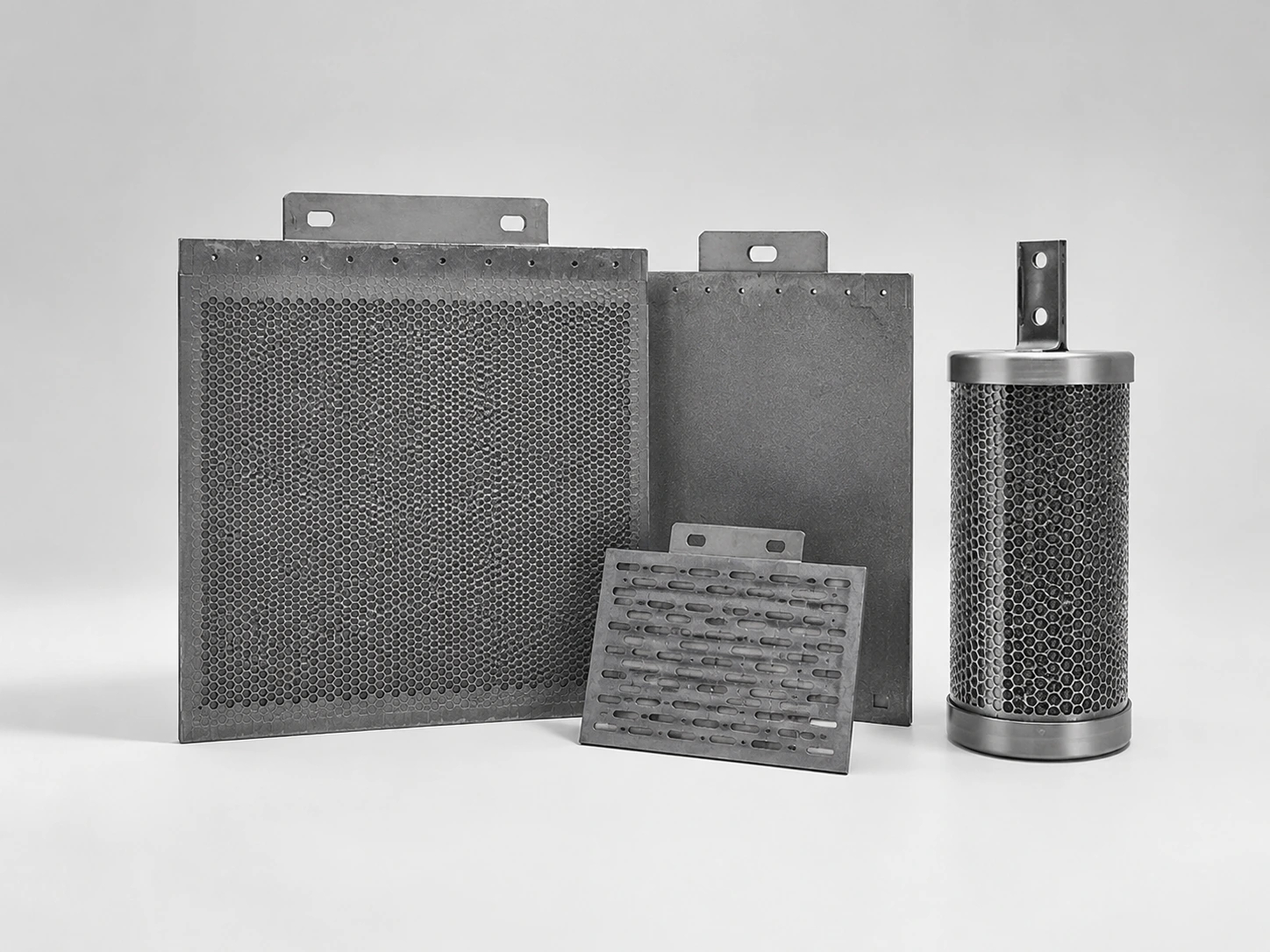
Titanium anodes and graphite anodes are both used in industrial electrolysis, but they are selected for different reasons. The better choice depends on the electrolyte, target reaction, current density, expected service life, maintenance plan and total project risk.
A titanium anode is usually a titanium substrate with a functional coating, such as MMO, DSA, platinized titanium or other special coating systems. A graphite anode is based on carbon material and may be selected in some applications because of availability, cost structure or process tradition. In many industrial projects, the useful comparison is which anode is more suitable for the operating conditions.
1. Structure and working principle
A titanium anode is a coated electrochemical component with a titanium substrate and a functional surface layer. Its performance mainly comes from the coating system. The titanium substrate provides mechanical support and corrosion resistance, while the coating is selected according to the electrochemical reaction, such as chlorine evolution, oxygen evolution, oxygen-containing oxidation or other process-specific reactions.
A graphite anode is a conductive carbon-based electrode. It can work in many electrochemical environments, but it may be gradually consumed or mechanically affected depending on the process conditions.
2. Dimensional stability and electrode spacing
One important difference is dimensional stability. Titanium-based coated anodes are commonly selected when the process requires a stable electrode shape, predictable spacing and lower maintenance frequency under suitable operating conditions.
Graphite anodes may be consumed during operation in some environments. This can change electrode geometry, influence cell spacing and require more frequent replacement or maintenance. In some processes this is acceptable; in others it can affect voltage stability, product consistency or equipment availability.
3. Coating flexibility and reaction matching
Titanium anodes can be configured with different coatings. MMO and DSA-type coatings are often discussed for chlorine evolution and other industrial electrolysis applications. Platinized titanium may be reviewed for specific laboratory or special electrochemical uses. PbO2-coated titanium anodes may be reviewed for certain oxidation environments after operating data is available.
This flexibility is a key advantage, but it also means the supplier needs operating data. Without electrolyte composition, current density, temperature and target reaction information, coating selection becomes uncertain.
4. Mechanical strength and equipment integration
Titanium substrates can be fabricated into plates, meshes, tubes, rods, ribbons or custom structures. This makes them suitable for equipment integration where dimensions, mounting holes, terminal structure, busbar connection or cable connection must match the cell design.
Graphite can also be machined, but its mechanical behavior, fragility and wear pattern need to be considered, especially in equipment where handling, vibration, hydraulic flow or repeated maintenance may occur.
5. Cost should be considered as total operating cost
Graphite may appear more attractive if only the initial purchase price is compared. However, industrial projects often need to consider total cost, including replacement frequency, shutdown risk, process stability, labor, logistics and quality variation.
Titanium anodes may have a higher initial cost, but they can be more suitable when the project values dimensional stability, coating-specific performance, corrosion resistance and reduced maintenance under agreed operating conditions.
6. Practical comparison table
| Comparison item | Titanium anode | Graphite anode | Buyer note |
|---|---|---|---|
| Working surface | Titanium substrate with functional coating | Carbon-based conductive material | Compare by reaction and electrolyte, not appearance |
| Dimensional stability | Often selected where stable geometry is required | May be consumed or worn in some processes | Important for cell spacing and maintenance planning |
| Customization | Plate, mesh, tube, rod, ribbon and custom assemblies | Machinable but mechanical limits should be considered | Review installation and handling conditions |
| Cost logic | Higher initial cost in many cases | Often lower initial purchase cost | Compare replacement, downtime and process risk |
| Selection data needed | Coating depends on electrolyte and current density | Suitability still depends on process conditions | Operating data is necessary for both options |
7. When should you consider titanium anodes?
Titanium anodes are worth reviewing when the project requires:
- Stable electrode dimensions.
- Specific coating selection for a target reaction.
- Corrosion resistance in a defined electrolyte.
- Custom shapes or connection structures.
- Lower maintenance frequency under suitable operating conditions.
- Better integration with industrial electrolysis equipment.
Graphite remains relevant in processes designed around graphite, replacement plans that fit graphite operation, or environments where a coated titanium solution is not the most practical option.
8. Information needed before comparison
- Application and target reaction.
- Electrolyte composition and temperature.
- Current density and duty cycle.
- Anode dimensions and installation method.
- Expected service life and maintenance plan.
- Existing anode material and pain points if replacement is being considered.
The final selection should be based on operating conditions rather than a generic material comparison. TJNE can review titanium-based anode options when the electrolyte, current density, dimensions and application purpose are available.