
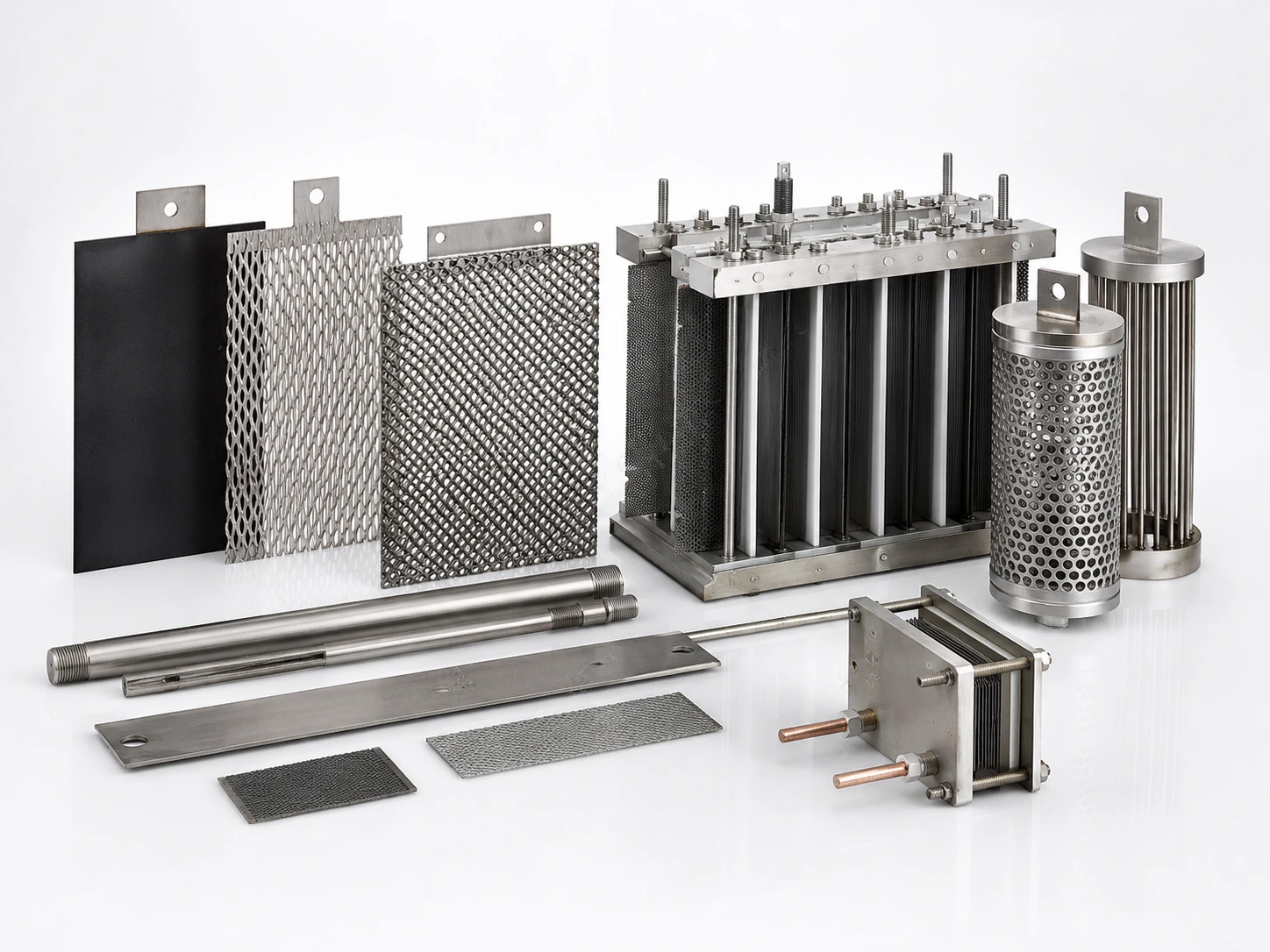
A useful technical review for a custom titanium anode depends on more than the outside dimensions of the electrode. Titanium anodes are normally configured according to the operating environment, the target electrochemical reaction and the way the electrode will be installed in the equipment. When these details are missing, a supplier can only give a rough reference, and the final design may need to be revised later.
For TJNE, the purpose of early technical review is to reduce this uncertainty. The following information helps engineers select the substrate form, coating system, connection method and documentation scope more efficiently.
1. Application and reaction purpose
Start with the application. A titanium anode used for chlorine evolution, cathodic protection, electrochemical oxidation, electrowinning, electroplating or a pilot-scale research test may look similar from the outside, but the coating logic can be different.
- Application area and process purpose.
- Target reaction, such as chlorine evolution, oxygen evolution or oxidation.
- Lab testing, pilot testing or continuous industrial operation.
- Whether the customer needs only an anode component or a larger electrode/cell-related assembly.
2. Electrolyte or operating medium
The electrolyte or operating medium is one of the most important inputs. Coating selection should be reviewed against the real chemical environment and product function together.
- Main electrolyte or liquid composition.
- pH and temperature.
- Chloride, acid, sulfate or other key ion concentration.
- Presence of organic matter, suspended solids or metal ions.
- Whether the medium is stable or changes during operation.
For wastewater or COD-reduction related inquiries, a water analysis is especially important. Removal targets are best discussed together with water chemistry, reactor configuration and operating conditions.
3. Current, current density and operating duty
Electrical conditions directly affect coating selection and expected service life. If exact current density is not yet available, the total current, electrode area, power supply range or test plan can still help with the initial review.
- Total current and current density.
- Cell voltage range if known.
- Continuous or intermittent operation.
- Daily operating hours.
- Expected test duration or industrial service target.
4. Dimensions, drawings and connection details
For custom electrodes, drawings are highly useful. Even a simple sketch can help confirm the active area, titanium thickness, connection method and installation restrictions.
- Length, width, thickness and active coating area.
- Quantity and tolerance requirements.
- Connection method, such as threaded studs, tabs, cables or busbar interface.
- Whether single-side or double-side coating is required.
- Installation space or equipment interface drawings.
5. Service-life expectation and documentation needs
A target service life can be discussed only after the operating conditions are understood. Service life depends on current density, electrolyte composition, temperature, duty cycle and installation conditions.
For industrial procurement, it is also useful to clarify whether the project requires documents such as drawings, material information, inspection records, certificates, packing details or export documentation.
6. Common missing information in custom anode enquiries
Many early enquiries start with a dimension and a coating name. That is enough to begin communication, while reliable technical review usually benefits from additional process data. Missing electrolyte, current density, temperature, connection detail or use purpose may change the recommended coating and structure.
- For cathodic protection applications, CP design inputs and installation method help the review.
- For electrochemical oxidation applications, wastewater data and reactor assumptions help the review.
- For plating or electrowinning applications, electrolyte composition and current density are core inputs.
- For laboratory research applications, test duration, target reaction and equipment interface help define the specification.
7. Quick project input checklist
- Application and process purpose.
- Electrolyte or operating medium.
- pH, temperature and key ion concentration.
- Current density or electrical data.
- Dimensions, drawing and quantity.
- Expected service life or test duration.
- Installation and connection requirements.
- Required documents and delivery expectations.
How TJNE uses this information
With these inputs, TJNE can review the coating system, substrate configuration, connection method and supply range before confirming a practical proposal. The goal is to keep the enquiry practical and make sure the buyer and supplier compare the same assumptions.
For early-stage projects, partial information is acceptable. A short application description, drawing or photo, operating medium and target use can already help the technical team decide what additional questions are necessary.