
Start from the foil target and equipment role
Copper foil equipment is best evaluated beyond equipment names such as cathode drum, anode cell or surface treatment machine. The useful starting point is the foil product target: copper foil type, target width, thickness range, production stage, surface requirement and whether the project is a laboratory line, pilot line, upgrade package or broader line-level cooperation.
When this background is clear, equipment suppliers can review the module boundary, interface conditions and acceptance criteria more effectively. It also helps the buyer avoid comparing quotations that include different scopes.
1. Cathode drum discussion points
The cathode drum is a core unit in electrodeposited copper foil production. A supplier discussion should clarify size, surface condition, dimensional accuracy, rotation interface and maintenance expectations together.
- Target foil width and corresponding drum size.
- Surface requirement and inspection expectation.
- Runout, straightness and dimensional acceptance criteria.
- Electrical connection and current distribution assumptions.
- Maintenance plan and whether grinding or reconditioning equipment is included.
2. Anode cell and anode system questions
The anode cell must be reviewed together with the cathode drum, electrolyte, operating current and process layout. If the anode cell is discussed as an isolated product, important interface details may be missed.
- Cathode drum diameter and installation interface.
- Operating current, current density and electrolyte conditions.
- Anode spacing and cell geometry.
- Cell body material, corrosion environment and maintenance access.
- Whether the buyer needs only the anode cell or a defined equipment module.
3. Copper dissolution system inputs
Copper dissolution is strongly linked to process stability. Before discussing equipment configuration, clarify the raw material form, copper concentration target, acid concentration, temperature, flow and control expectations.
- Copper source and feeding method.
- Target copper ion concentration and production capacity.
- Acid concentration, temperature and circulation conditions.
- Filtration, impurity control and tank/material requirements.
- Automation and monitoring expectations.
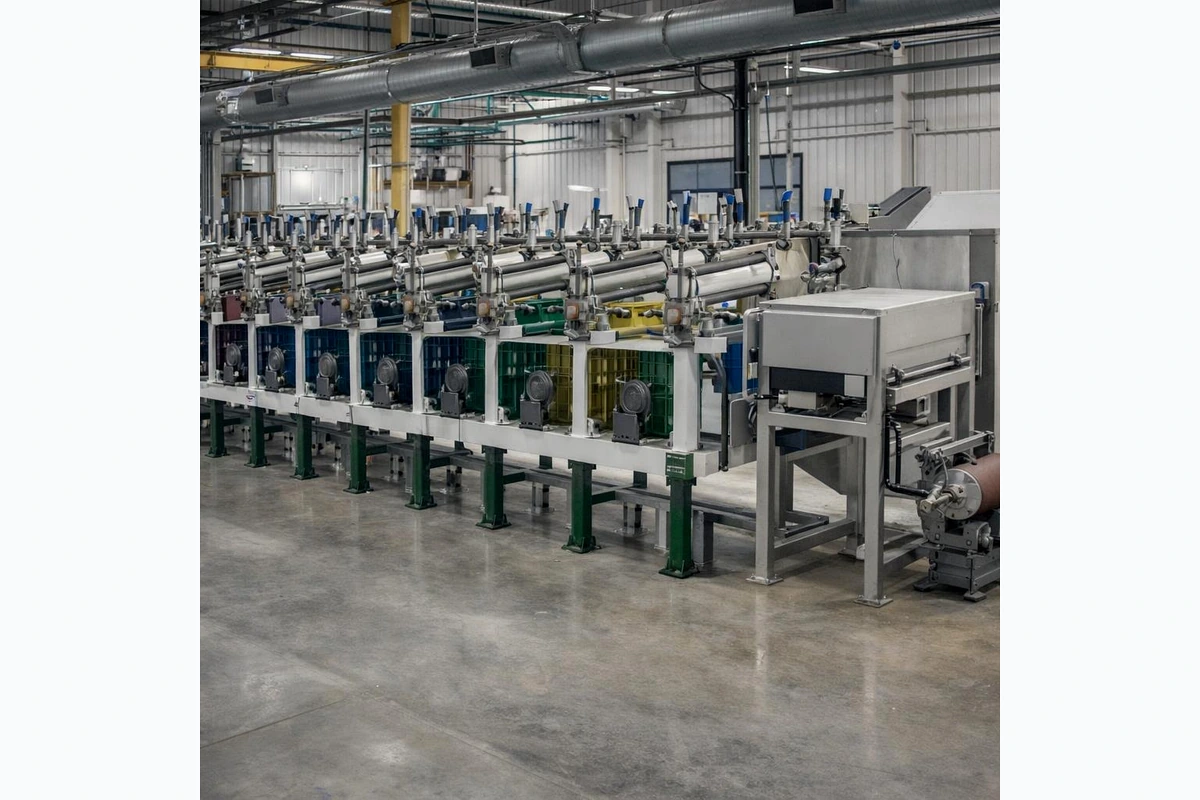
4. Surface treatment equipment questions
Surface treatment equipment should be discussed from the required foil properties and process route. The line speed, treatment sequence, washing sections, chemical conditions and winding/interface requirements all affect the final configuration.
- Required treatment functions and target surface properties.
- Line speed, foil width and thickness range.
- Washing, conditioning, anti-oxidation or post-treatment sections.
- Utilities, layout and interface with upstream/downstream equipment.
- Quality control points and acceptance method.
5. PET copper foil equipment boundary
For PET copper foil-related equipment, the PET substrate is typically supplied by the customer. TJNE focuses on copper plating equipment, surface treatment equipment and related process modules. The substrate type, pretreatment route, target copper thickness, winding conditions and product development stage should be clarified before defining the equipment scope.
6. Lab line, pilot line or production line?
A laboratory line is usually used for process verification and sample development. A pilot line may require more stable operation, more realistic process interfaces and stronger data continuity. A production line or line-level cooperation requires much clearer site conditions, utilities, automation, responsibility boundaries and acceptance criteria.
Buyers should identify the project stage early because the same equipment names can mean very different responsibilities at each stage.
7. Scope boundary checklist
Before requesting a quotation, define whether the required supply is:
- Single key equipment, such as cathode drum or anode cell.
- A group of modules, such as cathode drum + anode cell + copper dissolution.
- A laboratory or pilot-scale copper foil line.
- A line upgrade package for existing equipment.
- Defined line-level cooperation where site, utilities, integration boundary and acceptance criteria are clear.
How TJNE reviews copper foil equipment enquiries
TJNE supports copper foil projects through key equipment modules and defined line-level cooperation, including cathode drums, anode cells, copper dissolution systems, surface treatment equipment, grinding machines and lab/pilot-scale copper foil lines. Before confirming scope, TJNE reviews foil route, target width and thickness, output expectations, utility conditions, site interfaces and acceptance criteria.
This helps both parties move from a general equipment list to a comparable technical scope before commercial discussion.